The Middle East remains one of the world’s most sensitive political regions. Moreover, Iran sits at the center of many of its biggest security questions. Its relations with Israel, the United States, Gulf countries, Iraq, Lebanon, Syria, and Yemen all influence the regional balance.
For readers following Iran News, however, a crisis should not be viewed through one headline alone. Instead, it should be understood through several connected issues, including military action, nuclear policy, diplomacy, regional alliances, energy security, economic pressure, and humanitarian concerns.
Understanding the Current Middle East Crisis
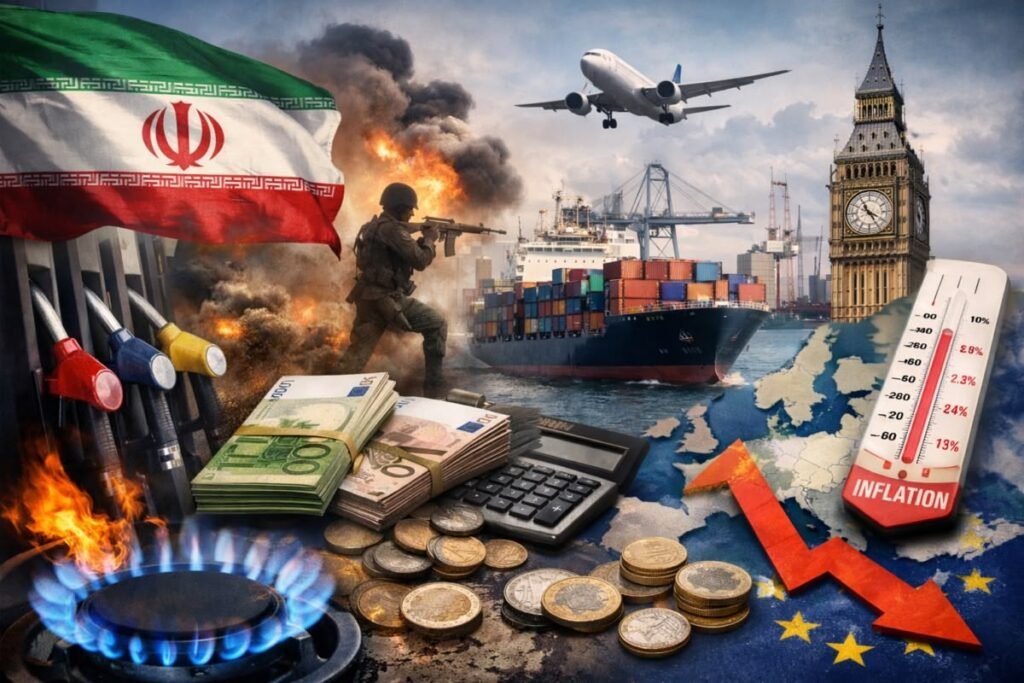
Why Iran Is Central
Iran is a major regional power.
It has a large population, a large territory, major oil and gas reserves, and a powerful missile and drone program. Furthermore, Iran has built relationships with governments and armed groups across the Middle East.
Its location is also important.
Iran sits beside the Persian Gulf and near the Strait of Hormuz, one of the world’s most important energy routes.
Therefore, a serious crisis involving Tehran can affect military security, energy prices, international trade, and global markets.
A Crisis With Many Layers
The Middle East crisis is not only about Iran and Israel.
The United States plays a major role.
Saudi Arabia and other Gulf states have important security interests.
Iraq can be affected because of its relationship with both Iran and the United States.
Lebanon can be affected through Hezbollah and its conflict with Israel.
Yemen can affect shipping through the Red Sea.
Syria has also been an important part of Iran’s former regional network.
Consequently, a crisis in one place can quickly create pressure in another.
The Iran Israel Conflict
A Long Rivalry
Iran and Israel have been strategic rivals for decades.
Their conflict has included intelligence operations, cyber activity, political pressure, military strikes, and competition through regional partners.
For many years, the two countries largely avoided sustained direct warfare.
Instead, they often fought indirectly.
However, that pattern changed significantly in 2024.
April 2024
In April 2024, Iran launched a large drone and missile attack against Israel.
The attack followed an Israeli strike on an Iranian diplomatic compound in Damascus that killed senior Iranian commanders.
Israel and its partners intercepted most of the incoming weapons.
Israel later responded with a limited strike inside Iran.
The exchange was important because it showed that the rivalry could move directly between the two countries.
October 2024
Iran launched another major missile attack against Israel in October 2024.
Israel then attacked Iranian military targets.
Therefore, direct strikes became part of the regional security landscape.
The attacks also demonstrated the importance of missile defense, intelligence, early warning systems, and military partnerships.
The June 2025 War
Israel’s Offensive
The most serious direct confrontation occurred in June 2025.
Israel launched a major operation against Iranian military and nuclear related targets.
Israeli leaders said the operation was aimed at reducing the threat posed by Iran’s nuclear and missile programs.
Iran rejected Israel’s justification.
Instead, Tehran described the operation as an attack on Iranian sovereignty.
Iran’s Response
Iran responded with repeated missile attacks against Israel.
Israeli and allied defenses intercepted many of the missiles.
Nevertheless, some weapons reached Israeli territory.
The attacks showed that Iran’s missile force could create a significant threat even against sophisticated air defense systems.
US Military Involvement
The conflict became even more serious when the United States entered directly.
On June 22, 2025, American forces struck Iranian nuclear sites at Fordow, Natanz, and Isfahan.
Washington said the operation was intended to damage Iran’s nuclear capabilities.
Iran condemned the attacks.
Tehran later launched missiles toward Al Udeid Air Base in Qatar, where American forces are stationed.
Ceasefire
A ceasefire was announced on June 24, 2025.
This reduced the immediate risk of continued large scale attacks.
However, the ceasefire did not solve the underlying disputes.
Iran’s nuclear activities remained a concern.
US sanctions remained.
Israel’s security concerns remained.
Iran’s regional relationships remained.
Therefore, the ceasefire should be viewed as a pause in major fighting rather than a complete political settlement.
Why the Nuclear Issue Matters
Iran’s Position
Iran says its nuclear program is peaceful.
Tehran argues that nuclear technology can be used for electricity, medicine, research, and other civilian purposes.
Iran also argues that it has legal rights under international agreements.
International Concerns
The concern among Israel and several Western governments focuses on Iran’s enrichment capabilities and the possibility that these capabilities could eventually support nuclear weapons development.
It is important to distinguish nuclear technology from a nuclear weapon.
Enrichment alone does not prove that a country has built a bomb.
However, advanced enrichment and reduced monitoring can increase international concern.
The 2015 Nuclear Agreement
The 2015 Joint Comprehensive Plan of Action placed limits on Iran’s nuclear program.
It also created monitoring arrangements.
In return, Iran received sanctions relief.
However, the United States withdrew from the agreement in 2018.
Iran later reduced compliance with several limits.
Consequently, the diplomatic space around the nuclear issue became much more difficult.
Diplomacy Versus Military Action
Military strikes can damage facilities.
However, they cannot easily remove scientific knowledge.
Iran has universities, engineers, scientists, and technical expertise.
Therefore, lasting control of the nuclear issue would likely require diplomacy and verification.
Iran’s Military Capabilities
Ballistic Missiles
Iran has developed a large ballistic missile program.
These missiles are central to its deterrence strategy.
Iran does not possess an air force equal to the United States or Israel.
Therefore, long range missiles provide Tehran with a way to threaten distant targets.
Drones
Iran has also developed advanced drone capabilities.
Drones can be used for surveillance and attacks.
They can also be produced at lower cost than many traditional aircraft.
Consequently, drones have become an important part of modern regional warfare.
Naval Forces
Iran maintains naval forces designed partly around the geography of the Persian Gulf.
These include fast boats, missiles, drones, mines, and other systems.
Such capabilities could threaten shipping during a major conflict.
However, a prolonged disruption of Gulf shipping could also hurt Iran’s own economy.
The Strait of Hormuz
A Global Chokepoint
The Strait of Hormuz connects the Persian Gulf with the wider ocean.
Large volumes of oil and gas pass through the area.
Therefore, the Strait has importance far beyond the countries immediately surrounding it.
What Happens During a Crisis?
A major military crisis could increase shipping insurance costs.
Vessels could face greater security risks.
Companies could choose longer routes.
Oil traders could fear future supply disruption.
As a result, global energy prices could rise even if physical supplies have not yet fallen significantly.
Why Iran Also Needs Stability
Iran exports oil and depends on international trade.
Therefore, Tehran has an economic interest in keeping regional shipping routes usable.
This creates a complicated balance.
Iran can use geography as a strategic advantage, but severe disruption would also create costs for Iran.
The United States and the Crisis
American Security Interests
The United States has major security interests in the Middle East.
It supports Israel.
It maintains military forces in the region.
It also has relationships with Gulf countries.
Therefore, American policy strongly affects regional calculations.
American Forces
US forces operate from several locations across the region.
During an Iran related crisis, these forces could become targets.
This creates a major escalation risk.
Iran may want to deter the United States from further attacks.
Washington, meanwhile, wants to protect its forces and partners.
Why Washington May Avoid a Wider War
A prolonged war would be costly.
American forces could face repeated attacks.
Energy prices could rise.
Global markets could become unstable.
Regional allies could also become targets.
Therefore, Washington has reasons to maintain deterrence while also trying to prevent uncontrolled escalation.
Gulf Countries and Regional Stability
Saudi Arabia
Saudi Arabia and Iran have competed for regional influence.
However, the restoration of diplomatic relations in 2023 showed that their relationship can change.
Riyadh is also investing heavily in economic development.
Therefore, Saudi Arabia has strong reasons to avoid a large regional war.
United Arab Emirates
The UAE is a major trade and financial center.
Its economy depends on international investment and transportation.
Consequently, regional stability is highly valuable to Abu Dhabi.
Qatar
Qatar is a major natural gas exporter.
It also has diplomatic relationships with different regional actors.
Therefore, Qatar can play an important role in mediation while protecting its own security interests.
Oman
Oman has a long history of quiet diplomacy.
It has maintained communication with countries that have difficult relations.
As a result, Oman can sometimes provide useful channels during periods of crisis.
Iraq’s Difficult Position
Relations With Iran
Iraq shares a long border with Iran.
The two countries have strong economic, cultural, and religious connections.
Iran also has relationships with several Iraqi political and armed groups.
Relations With the United States
At the same time, Iraq has important security and political relations with Washington.
This creates a difficult position.
Baghdad does not want Iraqi territory to become a battlefield between Iran and the United States.
Therefore, Iraqi leaders often have strong reasons to support de-escalation.
Energy Importance
Iraq is also a major oil producer.
Any regional crisis that affects Iraqi production or exports could create additional pressure on global energy markets.
Lebanon and Hezbollah
Iran’s Regional Partner
Hezbollah is one of Iran’s most important regional partners.
The group has political and military influence in Lebanon.
It has also fought Israel.
Therefore, any major Iran Israel conflict can create concerns about a wider Lebanese front.
Lebanon’s Vulnerability
Lebanon already faces serious economic and political problems.
Another major war could place additional pressure on the country’s infrastructure and population.
Consequently, many Lebanese civilians have strong reasons to avoid another large conflict.
Yemen and Red Sea Security
The Houthi Movement
The Houthis control large areas of Yemen.
Iran has provided support to the movement.
The Houthis have developed missile and drone capabilities.
They have also carried out attacks affecting shipping in and around the Red Sea.
Global Trade
The Red Sea is an important trade route.
When ships avoid dangerous waters, they may travel around southern Africa instead.
That can add significant time and fuel costs.
Therefore, Yemen’s conflict can affect global trade even when the fighting is far from Europe, Asia, or North America.
Syria and Iran’s Changing Position
Iran’s Former Role
Iran became deeply involved in Syria during the civil war.
It supported the government of Bashar al Assad.
Iranian forces and allied groups played important roles.
Political Change
The fall of Assad’s government in December 2024 changed the regional balance.
Iran lost an important state partner.
This affected the movement of people, weapons, supplies, and political influence.
Therefore, Syria’s new political direction is important for understanding Iran’s regional strategy.
Economic Pressure on Iran
US Sanctions
American sanctions have placed strong pressure on Iran’s economy.
Restrictions can affect banking, oil exports, foreign investment, technology, and international trade.
The purpose is to influence Iranian government policy.
Impact on Ordinary People
Economic pressure can also affect ordinary Iranians.
Currency weakness can raise the cost of imported goods.
Limited investment can affect employment.
Restrictions on technology can create additional problems.
Therefore, sanctions should be examined both as a foreign policy tool and as an economic issue.
Iran’s Adaptation
Iran has developed alternative trading arrangements.
China is an important buyer of Iranian oil.
Iran also trades with neighboring countries and other partners.
Consequently, sanctions have created significant pressure without completely isolating Iran.
Conclusion
The Middle East crisis involving Iran is complex because it combines military power, nuclear policy, diplomacy, energy, economics, religion, and regional alliances.
For readers following Iran News, understanding these connections is far more useful than following isolated headlines.
Iran has become central to regional security because of its military capabilities, geographic position, energy resources, nuclear program, and regional partnerships.
About The Author